Most guides to padel for beginners describe the sport. This one describes the hour. Someone has invited you to make up a four, you have said yes, and now you would like to know what is going to happen and which bits you are going to get wrong.
You will get some things wrong. Everyone does, and almost all of it is the same handful of things, because padel looks like small tennis and is not. What follows is the session in order, from the car park to the drill you should take home.
1. Before You Arrive: You Need Less Than You Think
You do not need a racket. Clubs rent them, and for a first session a rented one is the better choice anyway — you have no idea yet whether you want a forgiving round head or a punishing diamond (see our complete guide on how to choose a padel racket).
Bring flat court shoes. Running shoes have a raised heel and a soft sole that rolls when you push sideways, and padel is almost entirely sideways.
One piece of kit is not optional. The FIP rulebook requires every racket to carry “a non-elastic cord of a maximum length of 35 cm fixed into the handle which must be put around the wrist”, and states plainly: “Its use is obligatory.” It is not a formality either. Under Rule 13.1.r, if your safety cord breaks or you drop the racket, your pair loses the point immediately. Put the loop on before the first serve and forget about it.
2. The First Surprise: The Serve Goes Under, Not Over
The first thing that will feel wrong is the serve. There is no toss and no overhead swing.
Rule 6 of the FIP rules of padel sets out five conditions, and a legal serve satisfies all of them at once. You bounce the ball on the ground inside your own box. You keep one foot behind the service line and at least one foot on the ground. The ball must not cross the service line before you strike it. And the height at contact “must be at or below the waist level”. Then it travels diagonally into the box opposite.
The cue that makes this click: bounce the ball beside your back foot and push it, the way you would push a table-tennis serve. You are not trying to hit it hard. You are trying to start the point without giving it away.
Two serves, as in tennis. Two faults and the point is gone.
3. The Second Surprise: The Glass Is Not Out
This is the one that changes the sport. A ball that flies past you toward the back wall is not gone.
Rule 12 puts it simply: if the ball hits any part of the court after bouncing in your half, it stays in play, and “parts of the court” means the walls, the mesh fence, the ground, the net and the posts. Floor first, then glass, then your racket. Rule 14.1.b allows the reverse on the way out too — you may play the ball off your own wall and have it cross into the opponents’ court.
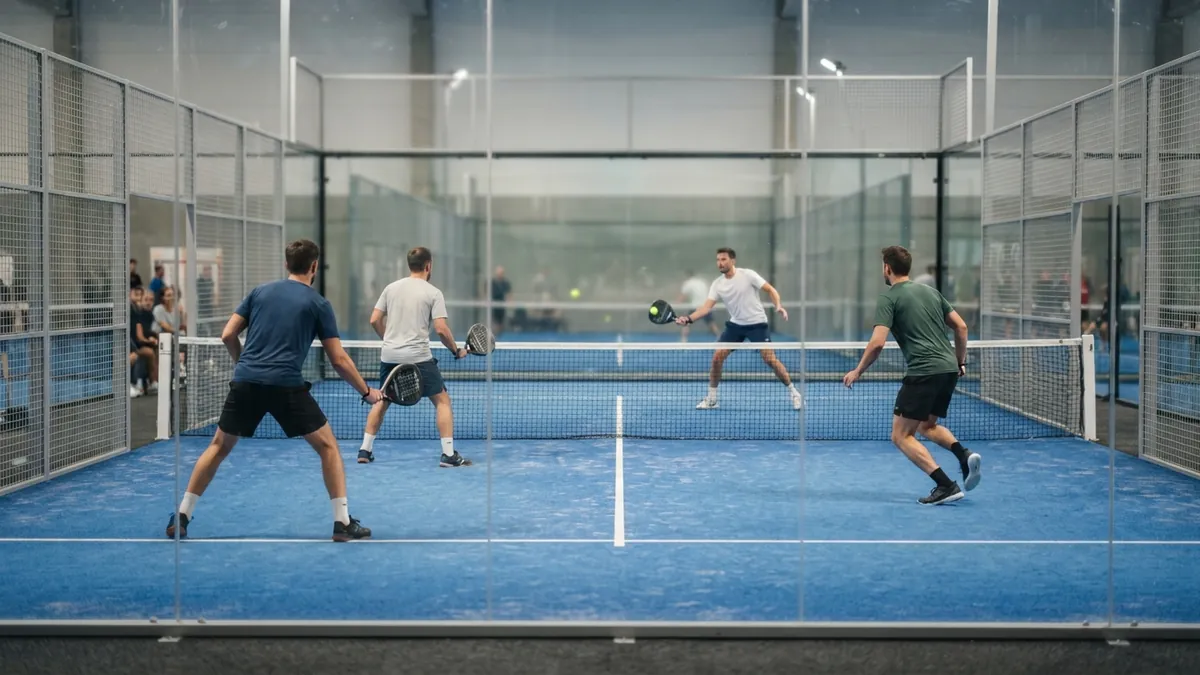
The mistake nearly every beginner makes is standing too close and getting jammed. The ball comes off the glass into your body and there is no room to swing.
The LTA’s guide to playing off the back glass gives the fix: turn side-on early, take the racket back early, get low and swing from low to high, and adjust with quick little steps rather than one big one. Read the speed — a fast ball needs you further off the wall, a slow one needs you closer.
The other half of the fix is a decision. On a ball heading for the side glass you have two separate chances: take it before it reaches the glass, or wait and take it after it comes out. Both work. Hesitating between them is what loses the point, and hesitating is what beginners do.
4. The Mistake Everyone Makes: You Both Stay at the Back
Here is the tactical error that will cost you more points than your technique will.
Padel is played in two lines. Either you and your partner are both at the net, or you are both at the back. The pair at the net wins most points, because they are hitting down and you are hitting up.
Beginners return the serve and then stay where they are, near the back glass, because that is where the ball keeps arriving. Meanwhile the other pair walks forward, takes the net, and every subsequent ball comes down at your feet.
Move up together. Not one of you — both, or you leave a diagonal gap straight through the middle.
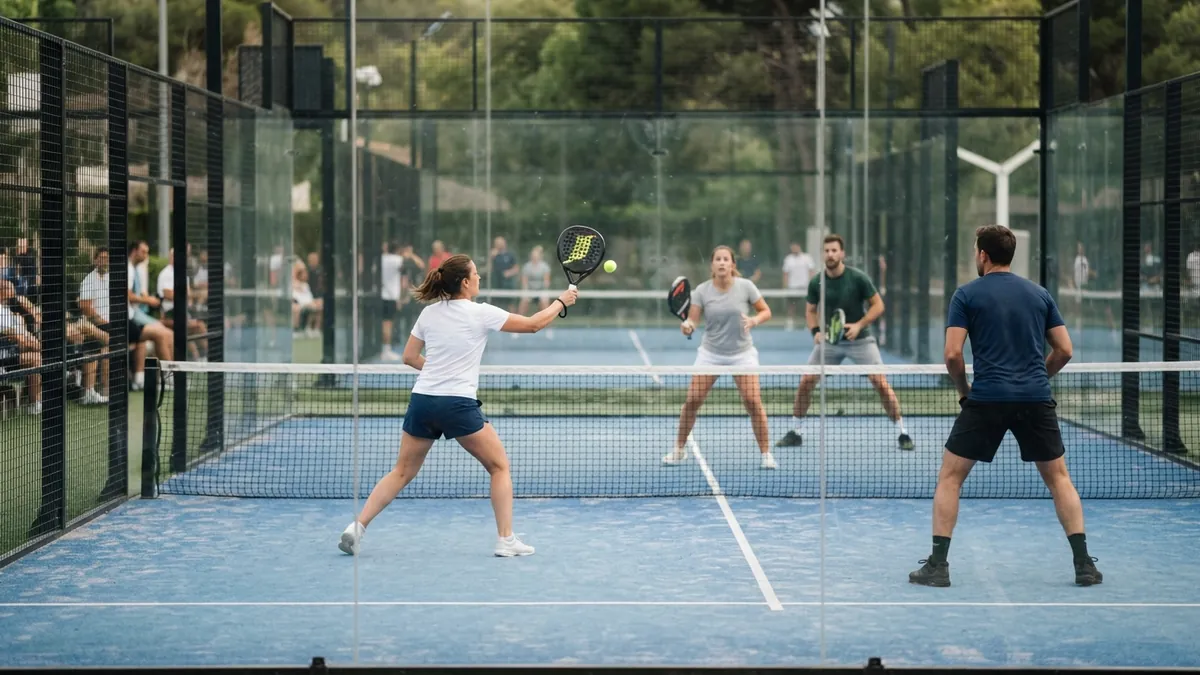
Which side you take matters less than you would think on day one. The instinct is to stand on the side that suits your forehand, and it is backwards: the sides are defined by who covers the middle. The Padel School’s coaches make the point that new players choose a side far too early, and their advice is blunt — get plenty of experience on both before you commit. Their guide to choosing your side is worth reading before you settle into a habit.
5. The Three Rules You Will Break in the First Twenty Minutes
None of these are embarrassing. All three are reasonable instincts from other sports, especially tennis. If you are coming from tennis, our breakdown of the five tennis habits to break in padel explains why long swings and baseline power work against you on a glass court.
| What you will do | The rule | What happens |
|---|---|---|
| Serve overarm, out of habit | Rule 6.4 — contact at or below waist height | Fault |
| Volley the return of serve out of the air | Rule 8.5 — the receiver must let it bounce | Point to the server |
| Play your own wall, then hit their wall before it bounces | Rule 13.1.g | Point lost |
That third one catches everybody. Playing the ball off your own glass is legal and encouraged. What is not legal is the ball reaching the opponents’ wall or fence without bouncing on their floor first. It has to land in their court.
There is a fourth worth knowing, because club players get it wrong constantly. Under Rule 7.1.e, a serve that lands correctly in the box and then touches the metal fence before its second bounce is a fault — even though it went in.
6. The One Thing to Practise Before Session Two
Not the serve. The glass.
The LTA’s beginner skills page sets out a progression you can run with one willing partner and no coach. They feed slow, deep balls that land past the service line so the ball carries to the back wall. You let it bounce on the floor, hit the glass, and bounce a second time before you play it. That extra bounce buys you the time to watch what the ball actually does.
Once that feels ordinary, take the second bounce away and hit it straight off the rebound.
Twenty balls of that is worth more than an hour of matches, because it converts the wall from a thing that happens to you into a thing you use. Their other headline for new players is the same one every coach repeats: control over power. Take pace off and give yourself a chance of the ball going in.
Conclusion: Padel for Beginners Is Mostly Unlearning
Nothing on this list is about hitting the ball better. The serve is a rule you have to obey, the glass is a habit you have to build, and the net position is a decision you have to keep making. That is genuinely what the first month is.
Go back a second time before you judge whether you like it. The first session is fun because the rallies are long. The second is where it starts making sense.
Ready to go deeper? Read our guide on the tennis to padel transition to fix your swing mechanics early, explore the guides for technique and tactics one shot at a time, or start with the resources page, which explains how the game works and glosses the Spanish shot names you are about to hear shouted across the court.
Frequently asked questions
Is padel hard to learn?
The first rally is easier than in tennis, because the underarm serve and the enclosed court keep the ball in play. Getting genuinely good is harder, because the walls and the net position take months to read. Most people have a fun first session and a frustrating fifth one.
Do I need my own racket to start?
No. Almost every club rents them, and a rented racket is the right choice for your first few sessions. Buy one once you know whether you like a round shape, which is forgiving, or a diamond, which is not.
Can I play padel if I have never played tennis?
Yes, and you may have an advantage. Tennis players arrive with a full swing and a habit of backing away from the wall, both of which have to be unlearned (see our guide on the five tennis habits to break in padel). Starting with no racket habits at all is not a disadvantage in padel.
How many sessions before I stop feeling lost?
Expect three or four before the walls stop surprising you, and longer before you move to the net without being told. Progress in padel is mostly about position and timing rather than power, so it arrives quietly.